
Acacia mangium, commonly known as mangium, salwood, or black wattle, is a fast-growing, nitrogen-fixing tree in the pea family (Fabaceae). Native to northeastern Australia, Papua New Guinea, the Moluccan Islands, and Indonesia, this tropical evergreen was introduced to Hawaiʻi in the 1970s for forestry trials and bioenergy research. While initially valued for its rapid growth and ability to enrich soils, A. mangium has since escaped cultivation and become invasive in parts of the Hawaiian Islands.
Botanical Features
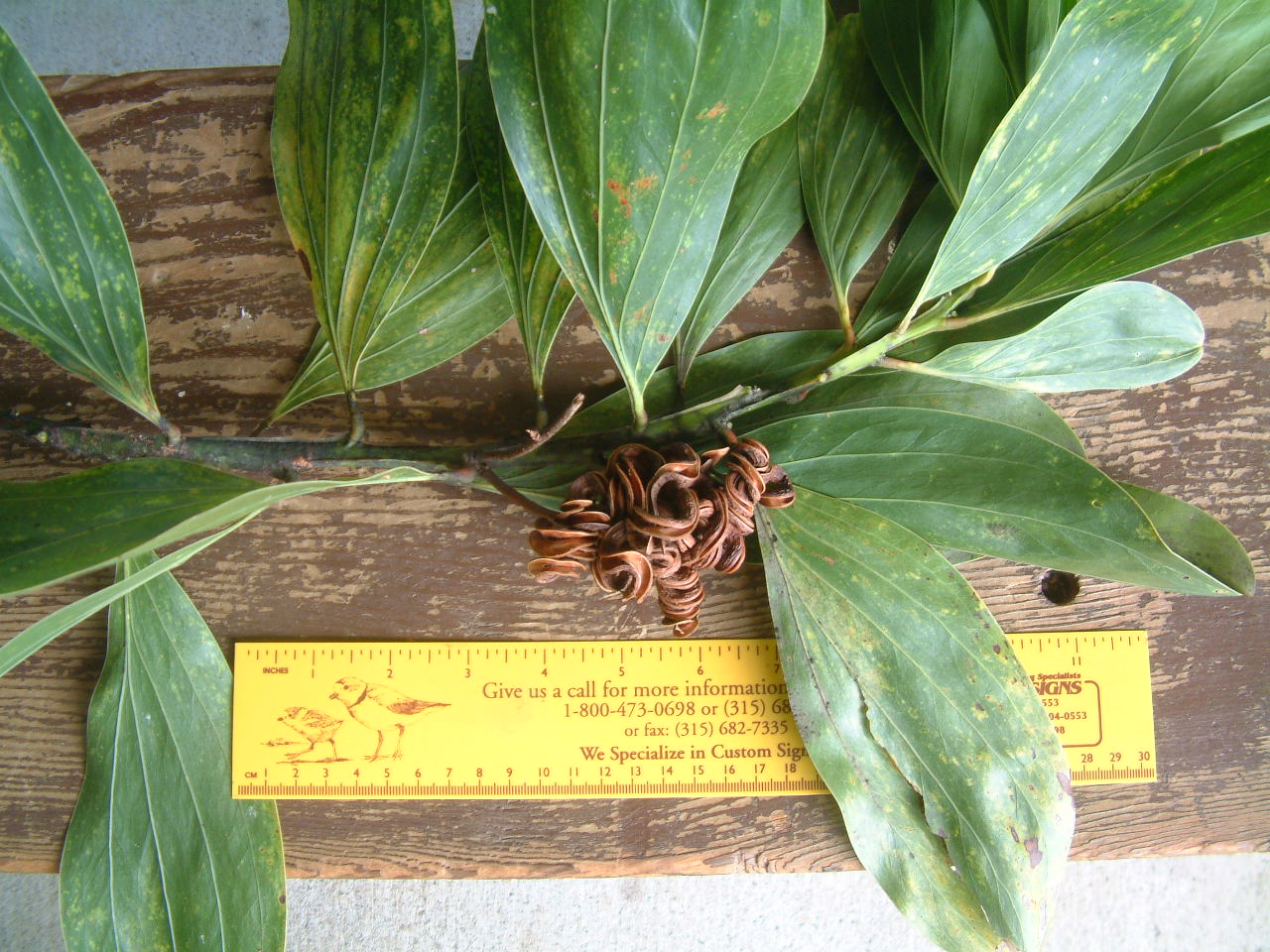
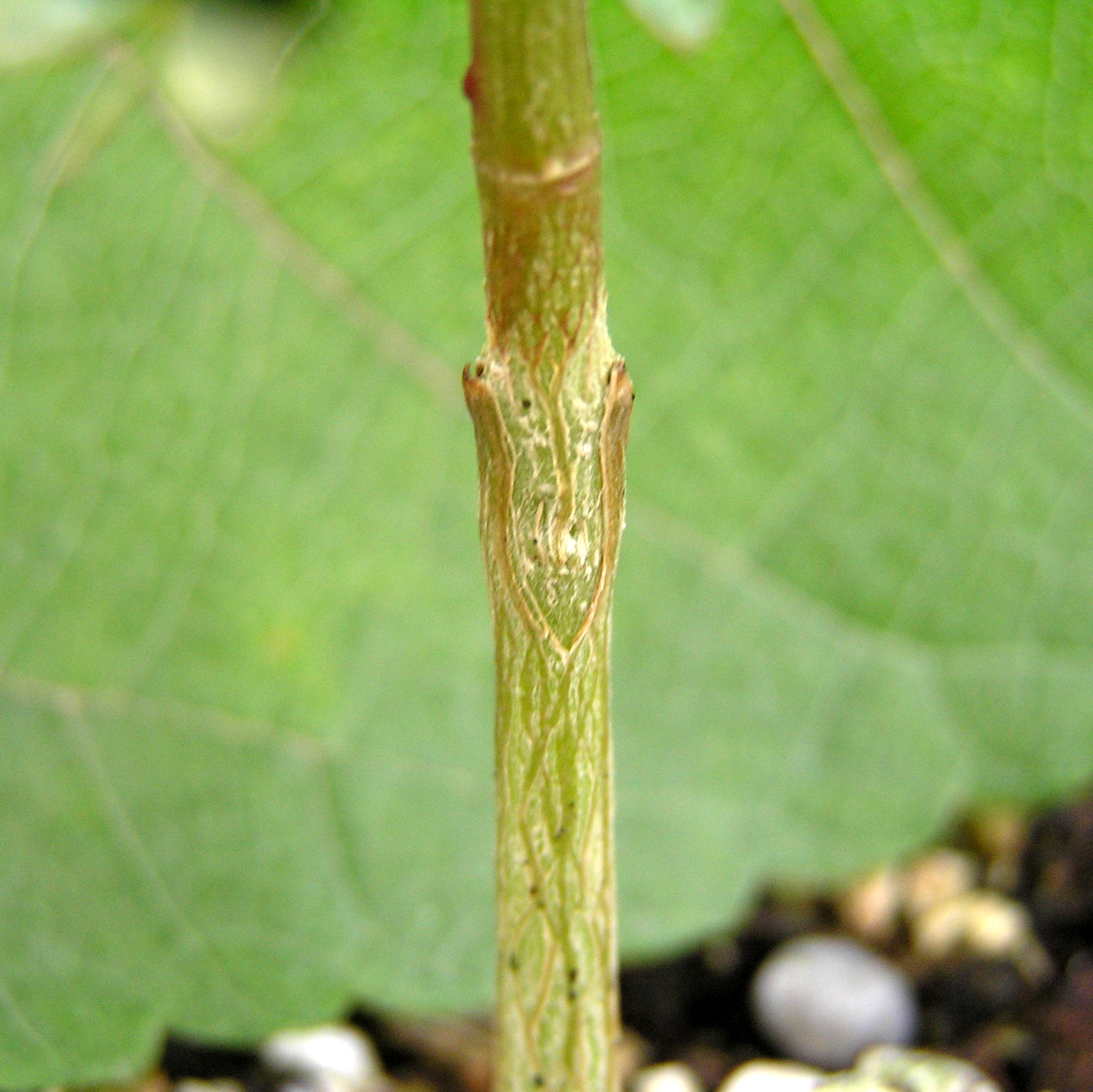
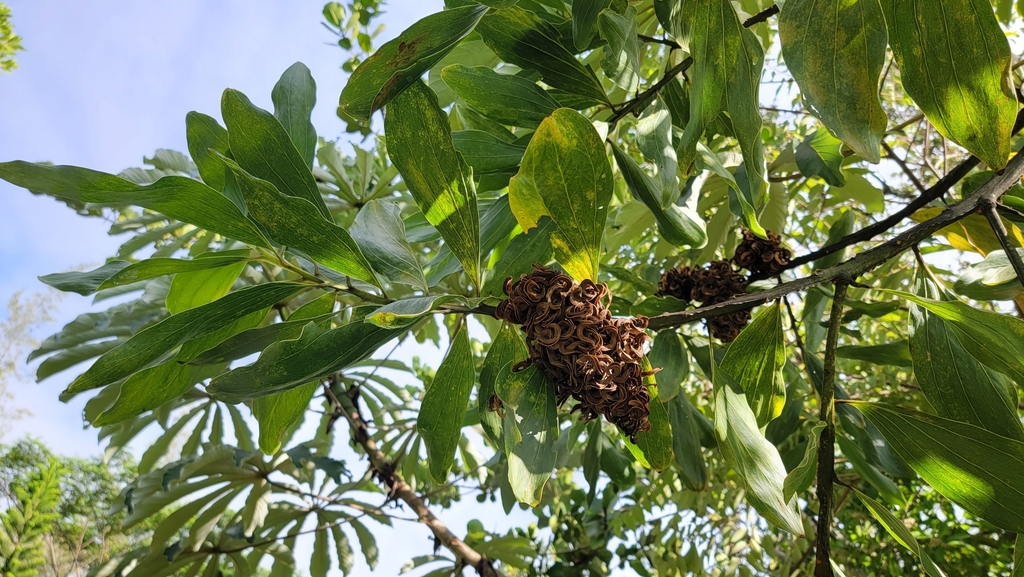
A. mangium is a tall, single-stemmed tree that can reach heights of 25 to 35 meters. Its bark is smooth and greenish in young trees but becomes fissured within two to three years. One of its most distinctive features is its phyllodes—broad, flat leaf-like structures that resemble those of Hawaiʻi’s native koa (Acacia koa), but are larger and have distinct parallel venation. The seed pods of A. mangium are also notable: long, narrow, and often twisted into tight spirals or open coils, they have a shape that some describe as resembling a “ball of worms.”
The tree is highly reproductive, flowering, and fruiting nearly year-round. Its seeds are spread primarily by gravity and birds, and it can reproduce both from seed and by coppicing (sprouting from cut stumps), making it resilient and difficult to control once established.
Introduction and Uses
The introduction of Acacia mangium to Hawaiʻi Island occurred during the 1970s, when global energy concerns and the decline of local bagasse production prompted interest in renewable biomass sources. Researchers from the U.S. Forest Service (USFS) and C. Brewer Co. Ltd. explored the use of short-rotation tree species for bioenergy production. Because A. mangium is a nitrogen fixer, it was chosen to be interplanted with eucalyptus in experimental trials to reduce the need for synthetic fertilizers.
Trial plots were planted at Kamae on the Hāmākua Coast and at Nīnole in the Kaʻū District at elevations of 1,000 to 2,000 feet. In addition to these research sites, a project worker reportedly planted A. mangium in a Puna neighborhood—either Hawaiian Paradise Park or Orchidland—where it has become widespread. Today, the species is naturalized and spreading in the very regions where it was intentionally introduced.
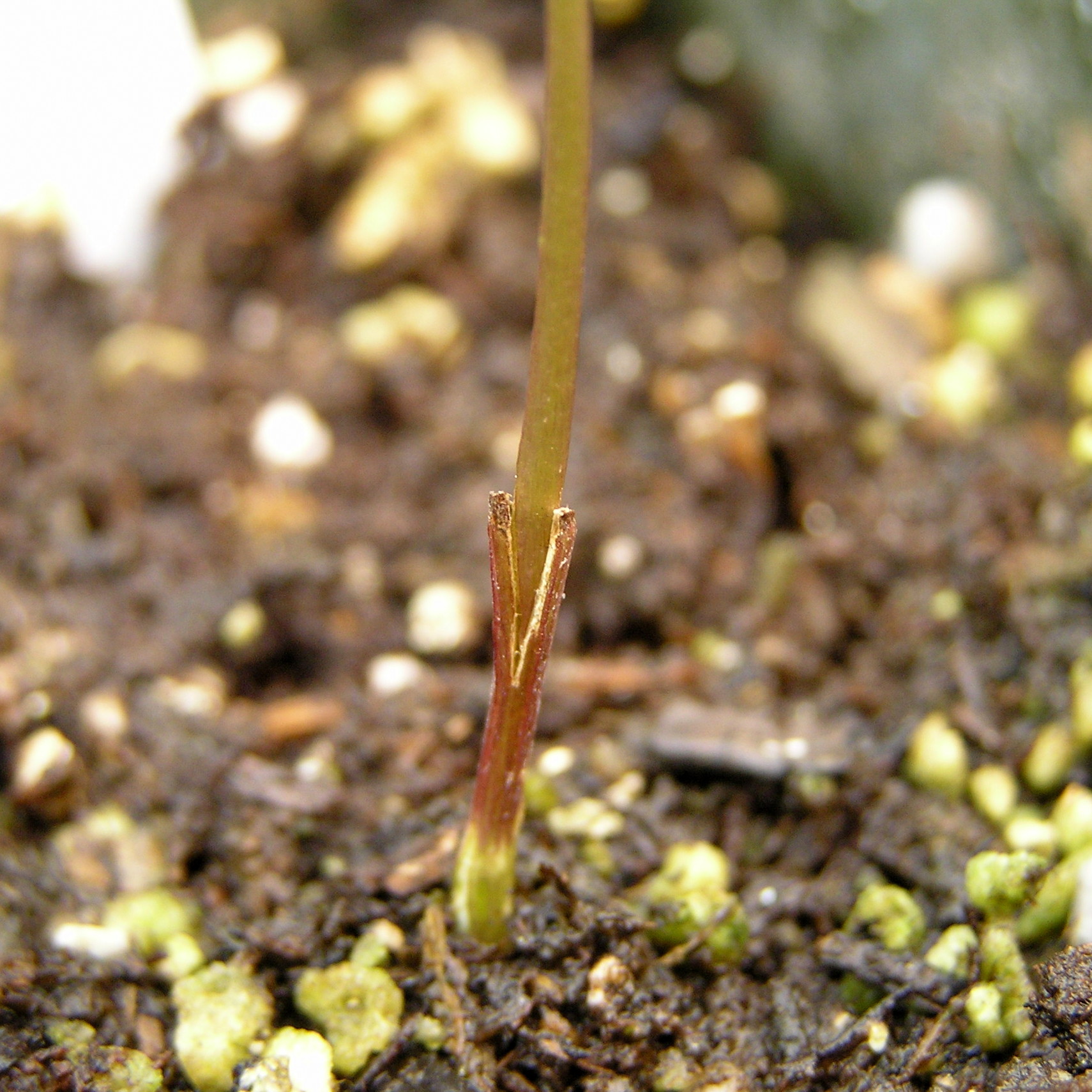
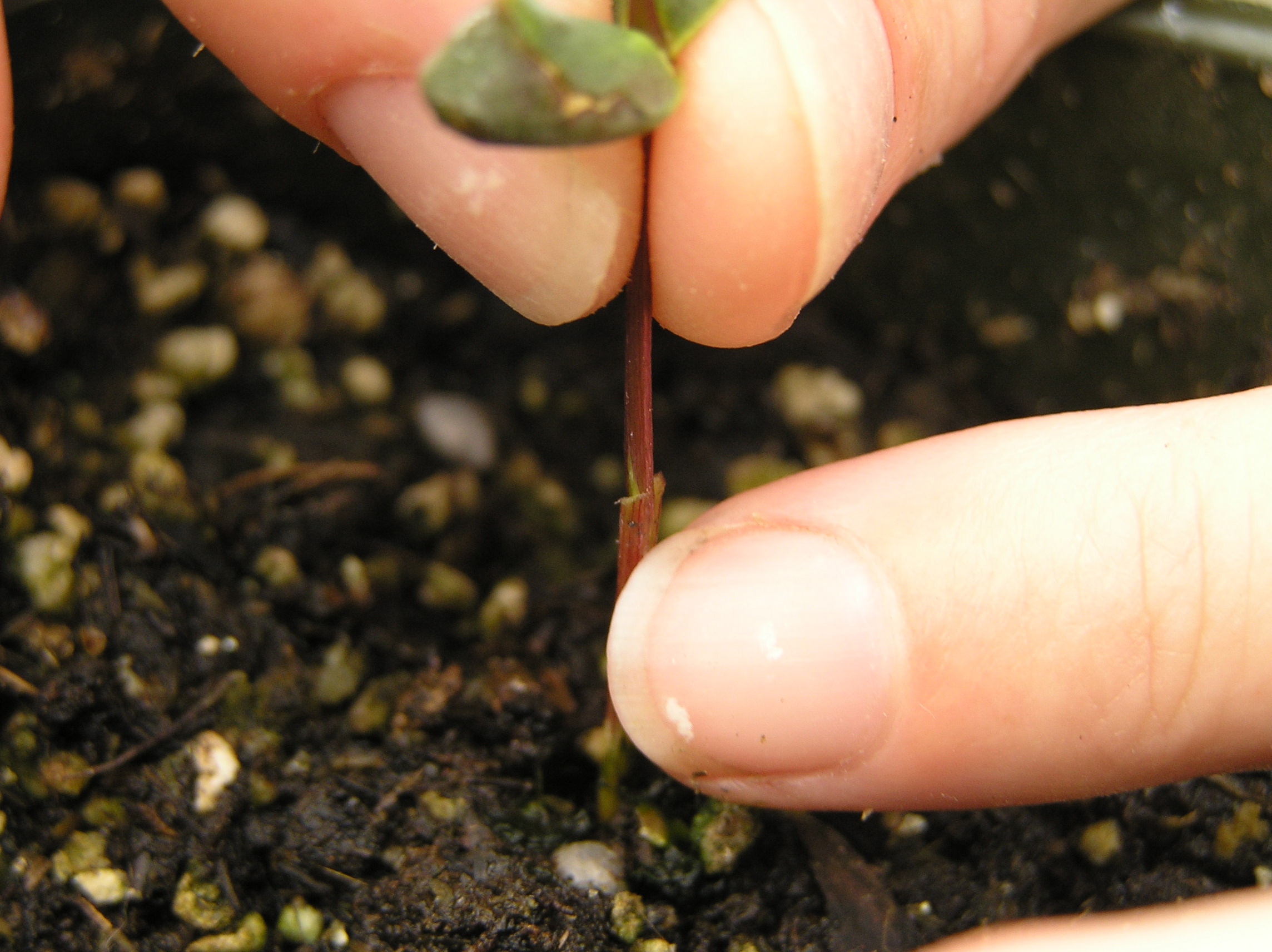
In 2006, researcher Scot Nelson conducted experiments grafting A. mangium onto native Acacia koa to explore the tree’s resistance to koa wilt—a novel approach with initial success rates ranging from 20% to 70%. After 4 years of growth, the graft was planted at the College of Tropical Agriculture and Human Resilience (CTAHR) Komohana Agricultural Complex. Sadly, the healthy grafted tree was attacked by black twig borers and eventually succumbed.
Island-by-Island Spread
On Kauaʻi, A. mangium was first planted at multiple CTAHR experimental stations. While it did not initially spread in the early 2000s, naturalization was observed in 2007 at three separate sites. Though eradication was proposed, the status of these efforts remains unclear.
Oʻahu followed a similar trajectory to Kauaʻi. The species was planted at the Waimānalo CTAHR station in 1986, escaped cultivation, and became naturalized by 2007.
According to Forest and Kim Starr, Maui saw a limited introduction, with only two known planting sites. As of 2003, the species was not spreading and remained localized.
Hawaiʻi Island residents on the windward side are most impacted by A. mangium. The tree is now considered a common weed in several areas, including Puna, Umuʻuma, and Hakalau. Extension Forester, J.B. Friday, observed its spread as early as 2002, and the Big Island Invasive Species Committee (BIISC) collected and submitted a voucher specimen to the Bishop Museum Herbarium in 2010 to confirm its naturalized status.
Ecological Concerns
Once naturalized, Acacia mangium is challenging to remove. Its prolific seeding, ability to coppice after cutting, and nitrogen-fixing capabilities give it a competitive edge in lowland and mid-elevation forests. It alters soil chemistry, suppresses native species, and disrupts restoration efforts. Its characteristics are similar to albizia (Falcataria moluccana), another fast-growing invasive tree that has caused widespread ecological damage in Hawaiʻi. Both species are native to the Moluccan Islands!
Control Methods
Physical control includes girdling mature trees and pulling up seedlings. However, due to the tree’s ability to sprout from stumps, physical removal is often insufficient.
Chemical control options have shown more promise. The Incision Point Application (IPA) method using Milestone herbicide has been used, although it acts more slowly than on albizia. A more effective approach has been the repeated application of triclopyr herbicide mixed with oil on cut stumps to prevent regrowth and reduce seed production.
Conclusion
Initially introduced with the best intentions, Acacia mangium is another example of a non-native species whose value in cultivation is now overshadowed by its invasiveness in the wild. As it spreads across Hawaiʻi’s landscapes, this fast-growing tree poses challenges to native ecosystems and ongoing conservation efforts.
We can’t fault those who first imported and planted this species — they didn’t have the tools and understanding we have today. Resources like the Hawaiʻi-Pacific Weed Risk Assessment help us predict how plants will likely behave in our unique environments.
Prevention is always the most effective strategy when it comes to invasive plants. Use plantpono.org to learn more about choosing pono plants and helping protect Hawaiʻi’s landscapes for future generations.


