
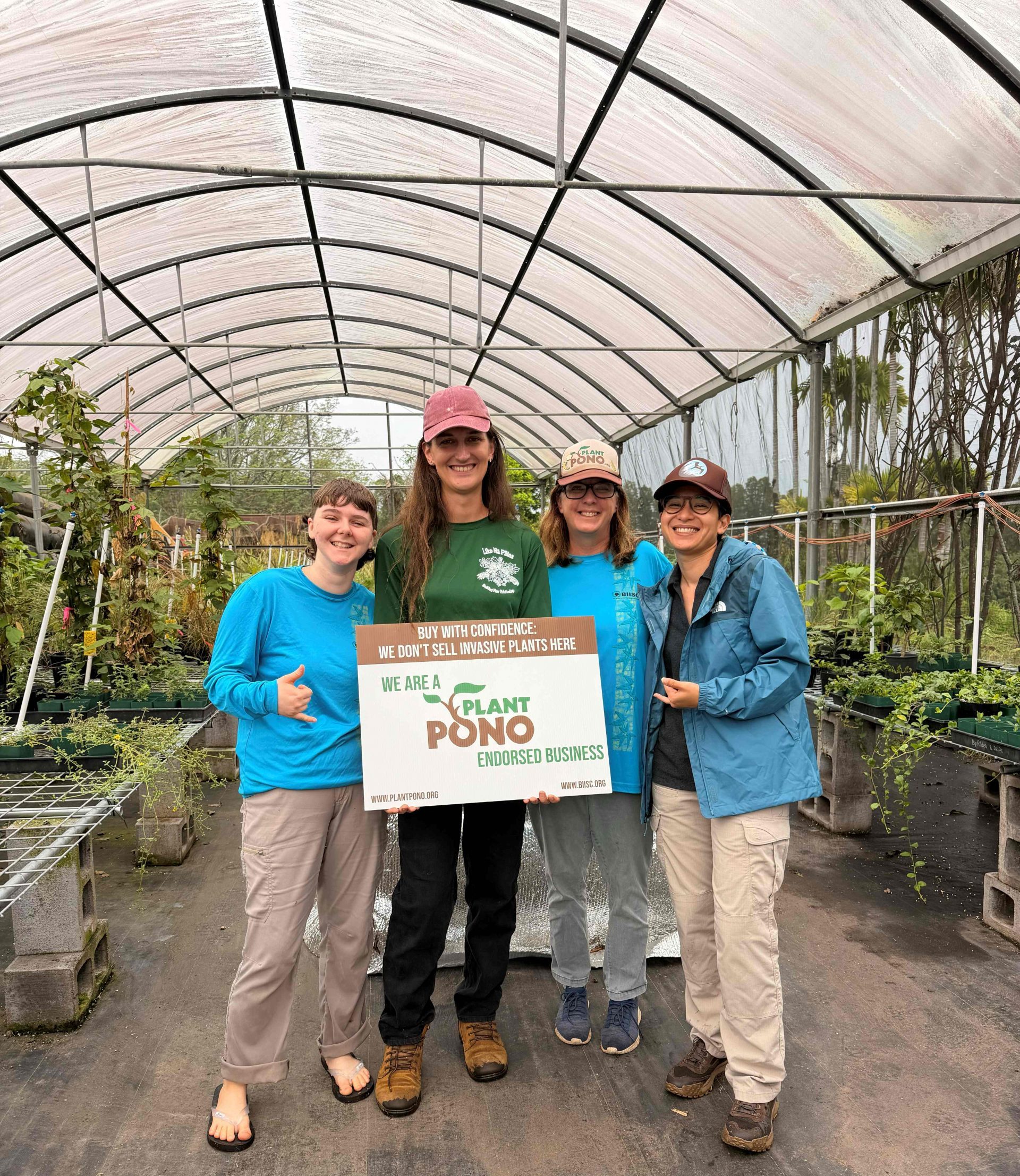
In February, our Plant Pono team got to meet with Lily Stein at OK Farms to endorse their native plant nursery located just a few minutes from Downtown Hilo in the ahupua’a of Puʻuʻeo. In ʻŌlelo Hawaiʻi, this name can be broken down into puʻu, meaning hill, and ʻeo, meaning calabash filled to the brim with food. And my oh my, how OK Farms is living up to this imagery of ʻāina momona (fatty, fertile, rich, or fruitful lands).
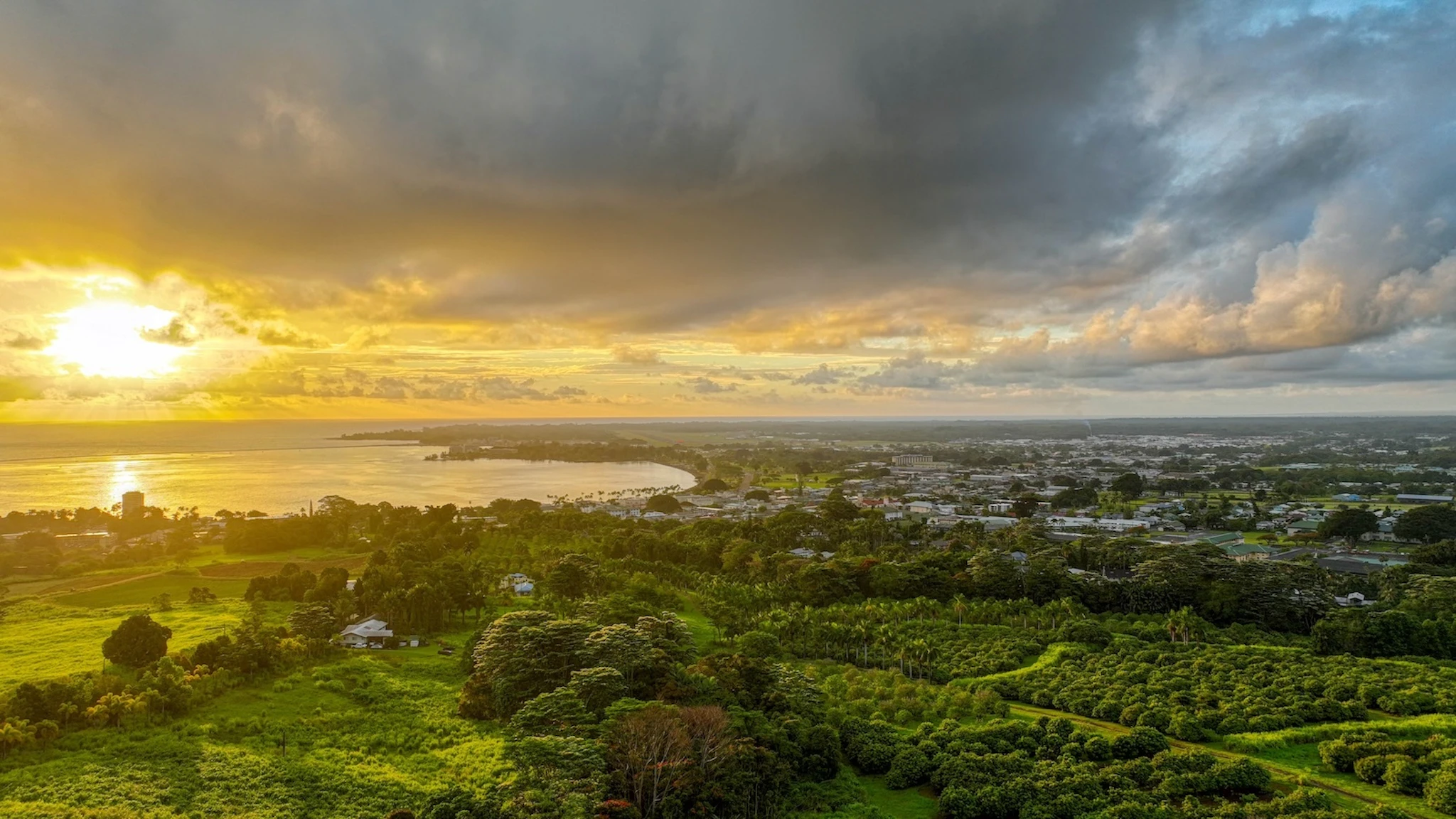
When we got out of the car, we were just amazed by the gorgeous view overlooking Hilo Bay. The ʻulu, maiʻa, and kō in their 5-acre agroforestry grove formed majestic purple and green silhouettes in the morning sun. The farm borders Waiau Stream, which joins the Wailuku River at Kaimukanaka Falls, and continues past Waiānuenue (Rainbow Falls).
Filling the Calabash
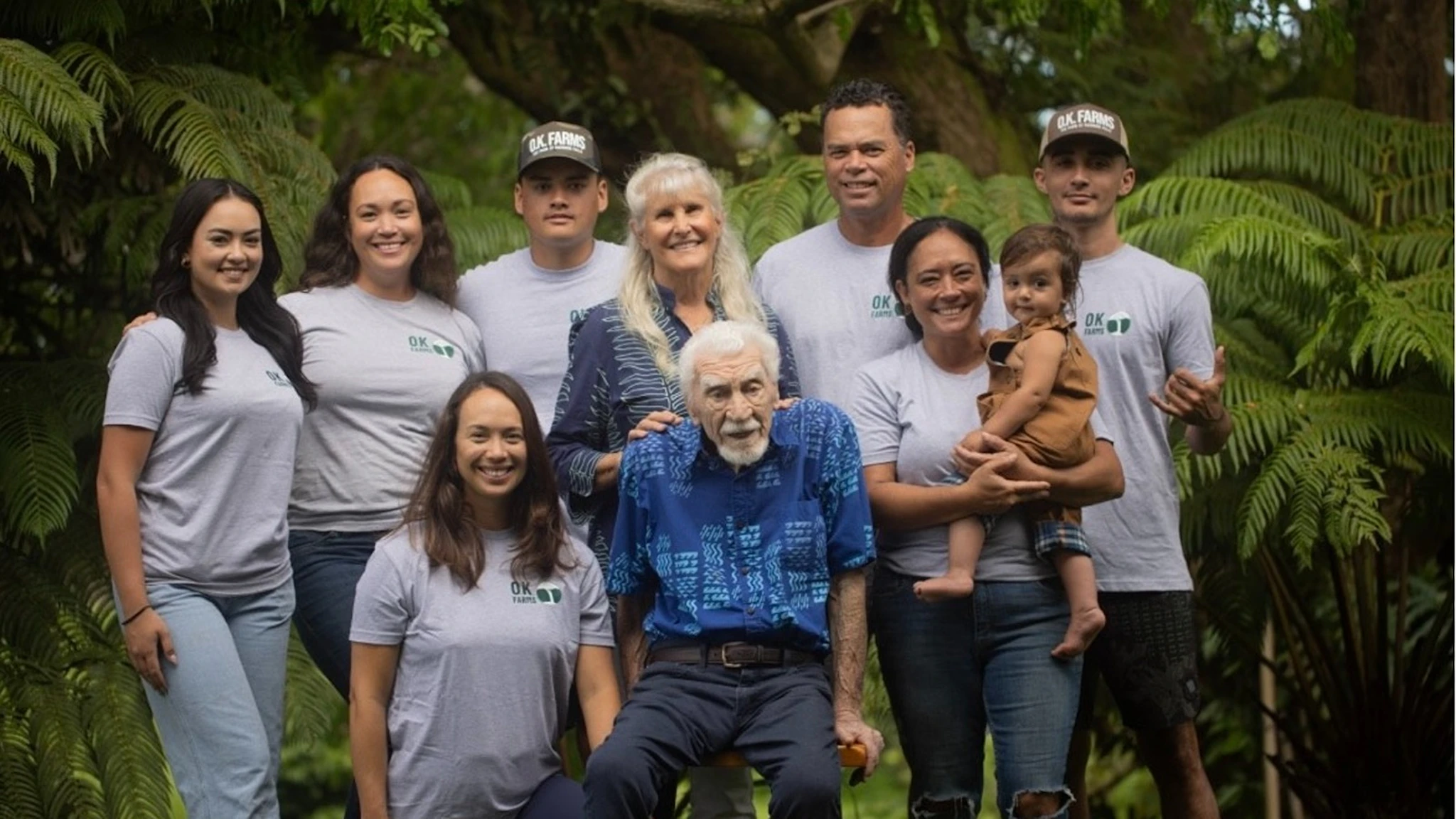
OK Farms humbly began in 2002 with a partnership between the late Edmund C. Olson and the Keolanui ʻOhana. Their mission is simple: to perpetuate sustainable agriculture in Hawaiʻi. Together, they stewarded almost 1,000 acres and are now one of the largest producers of tropical fruit in the US, living up to the ahupuaʻa name Puʻuʻeo. They cultivate a diversity of amazing crops, including lychee, longan, rambutan, citrus, mac nuts, coffee, and more! And they produce all of this with ʻāina in mind by adapting sustainable practices and managing invasive species from farm to stream.
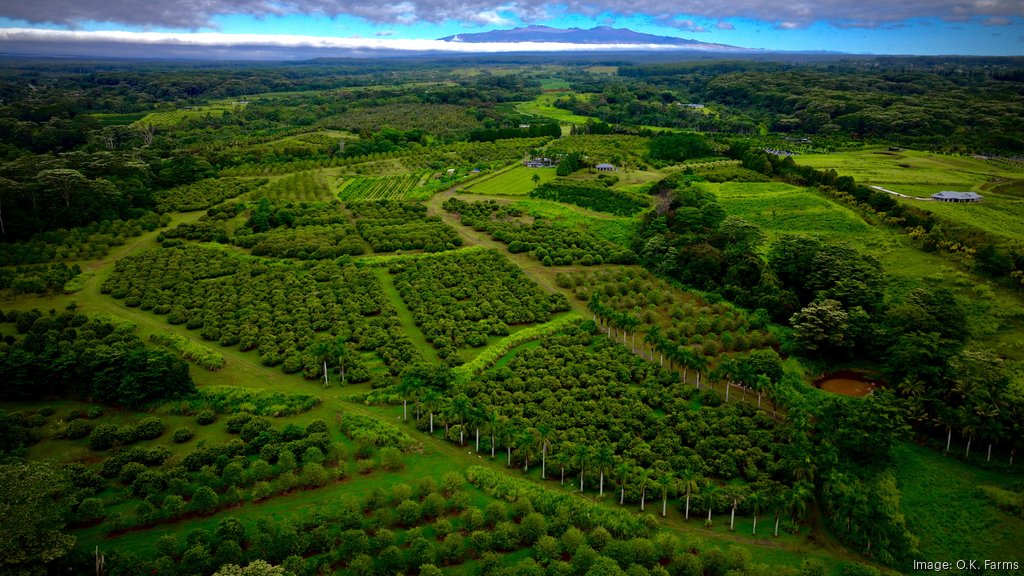
Since 2020, they have focused on regenerative agroforestry, which requires actively improving soil, water, biodiversity, ecosystem health, and carbon sequestration. Lessons learned will be applied to managing their recently established 74-acre Hawaiʻi Land Trust conservation easement. The land is to be managed like the rest of the farm, which works to nurture healthy soils, secure local food systems, and cultivate equitable futures.
The easement presents new opportunities for OK Farms, including the establishment of a new native and canoe plant greenhouse. Lily gave us the grand tour, which was filled with unique native species, intricate irrigation systems, and unexpected botanical history!
Like Kids in a Candy Store
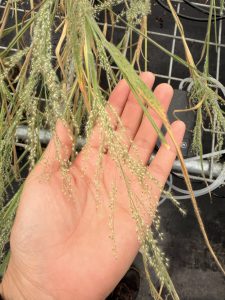
We were inundated by the diversity of native plants around us. Within our first steps, we were greeted by a large, fuzzy grass with soft seed heads that looked like soaked chia seeds and felt like a cloud. Lily introduced the grass to us as Panicum konaense, which is an endemic grass species from the dry Kona region. Although this grass feels delicate, its fuzziness is a vital adaptation to conserve water and deflect harsh sunlight in the hot places it grows.
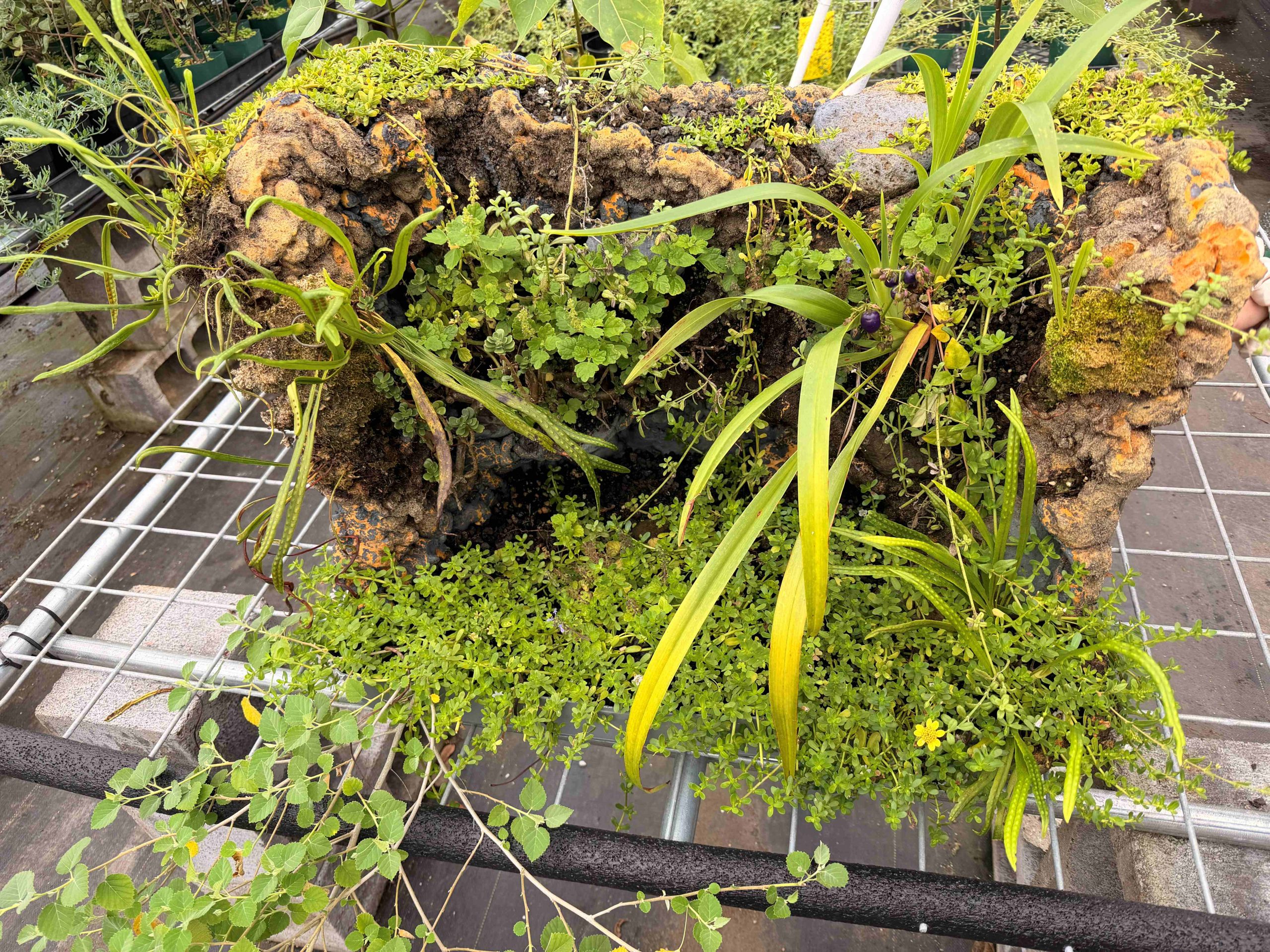
Lily does a top tier job of keeping all of her plants showroom quality with no pests or deficiencies in sight. Not only that, but she also creates attractive plant displays! Our jaws were on the floor when we saw her tabletop native garden. The handmade rock face is home to a fruiting ʻukiʻuki next to draping nehe branches, ʻalaʻala wai nui nested by ʻihi, and a pākahakaha (Lepisorus thunbergianus) fern border. The star of the show is the aquatic ʻaeʻae and the vibrant cascading ʻilima.
We got to spend some time learning about Lily’s botanical journey in Hawaiʻi alongside her mentor Jon Rathbun. Jon is the longest standing crew member with Hawaiʻi Environmental Restoration at Keauʻohana Forest Reserve. Lily told us about how she gained a tremendous amount of plant ʻike from Jon through this work, developing a photo identification book of all plant species found on Hawaiʻi Island. I know there are many plant nerds who cannot wait for that resource to be published!
Botanical History Lessons with Lily
Lily shared the story of David Nelson, a Kew Gardens gardener who traveled with Captain James Cook in 1779. This is the same infamous voyage during which they would land on Hawaiʻi during the time of Lono (Makahiki), when their white sails were seen as a welcome guest. While there, Nelson led a four day botanical collection mission up Mauna Loa from Kealakekua, where they would make the first Western collection of 55 Hawaiian plants. However, this feat was overshadowed by the large battle ending in Cook’s death after they took Aliʻi Nui Kalaniʻōpuʻu hostage. Luckily, Nelson escaped with his collection.
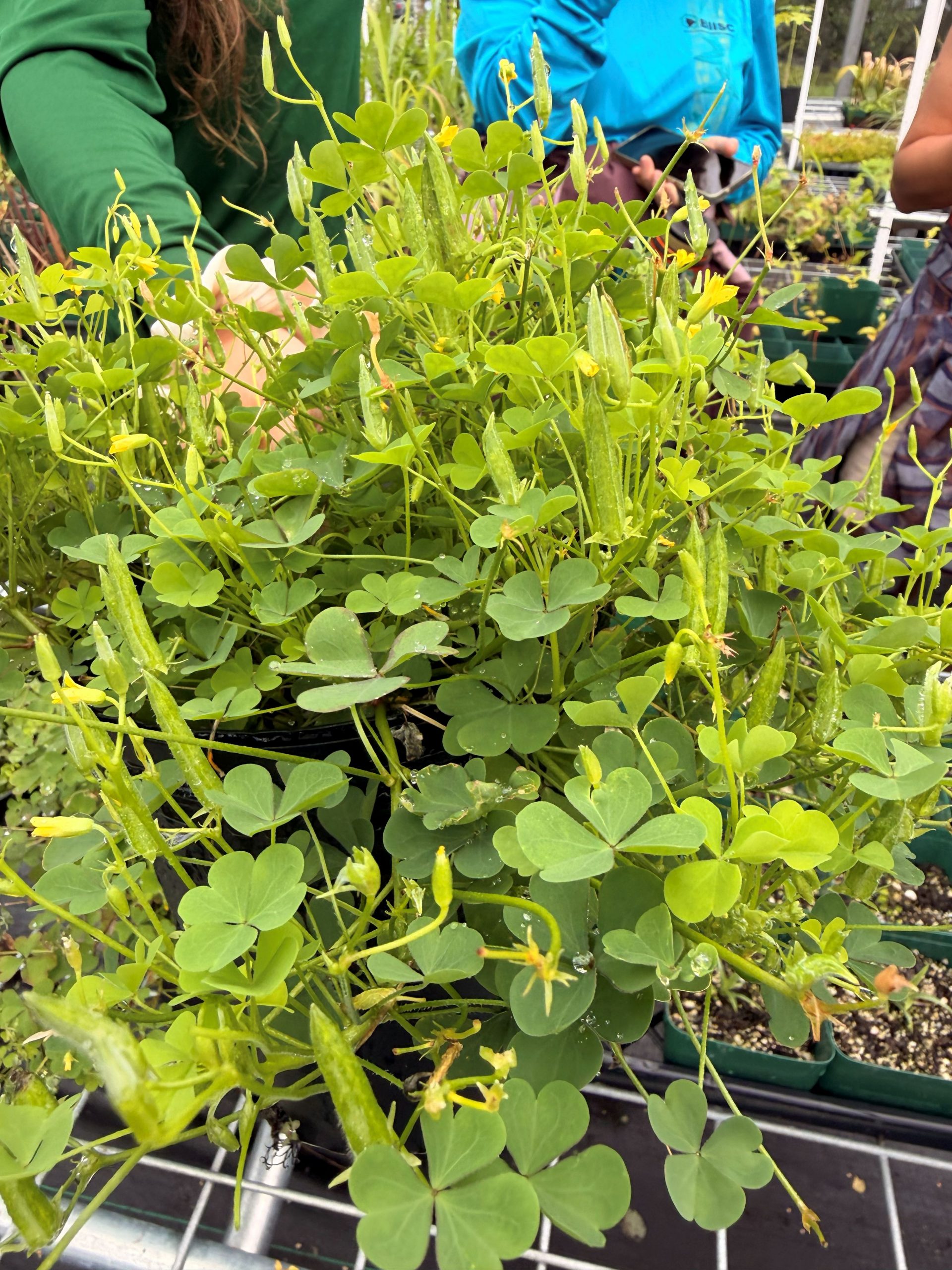
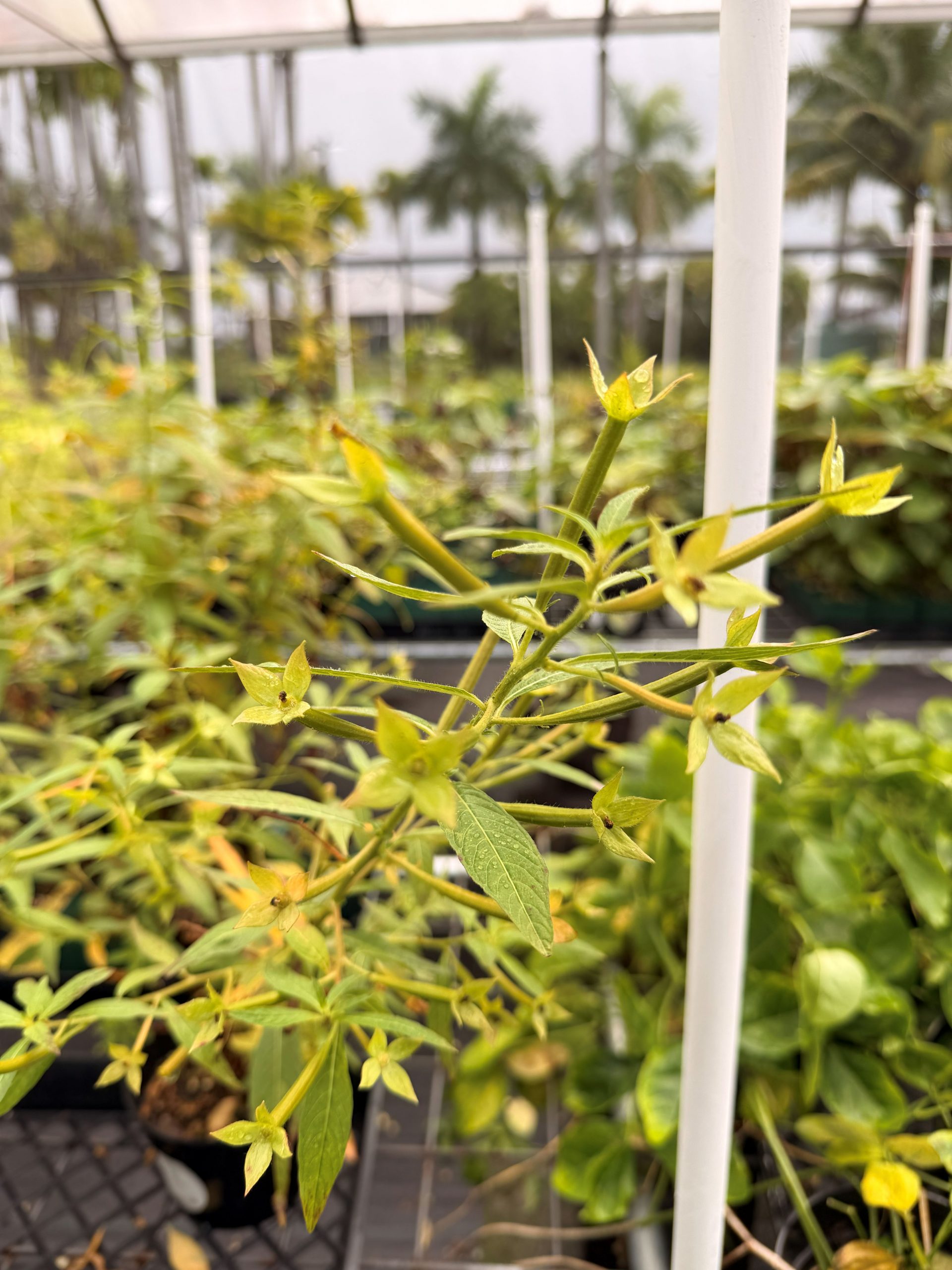
There are two interesting plants in the greenhouse that David Nelson collected on that 1779 mission. The first one we met was the wetland herb kāmole or Ludwigia octovalvis. Kāmole can be commonly found growing along waterways, ponds, and wet forests. It is a known weed of rice and soybean in other Asian-Pacific areas, which is why its tiny sand-grain seeds likely arrived with introduced taro cuttings or stuck to waterbird feathers. For a long time, I thought this plant was just another weed, but it might actually be one of the first “weeds” in Hawaiʻi! We also learned that ʻihi ʻai (Oxalis corniculata) has a very similar story.
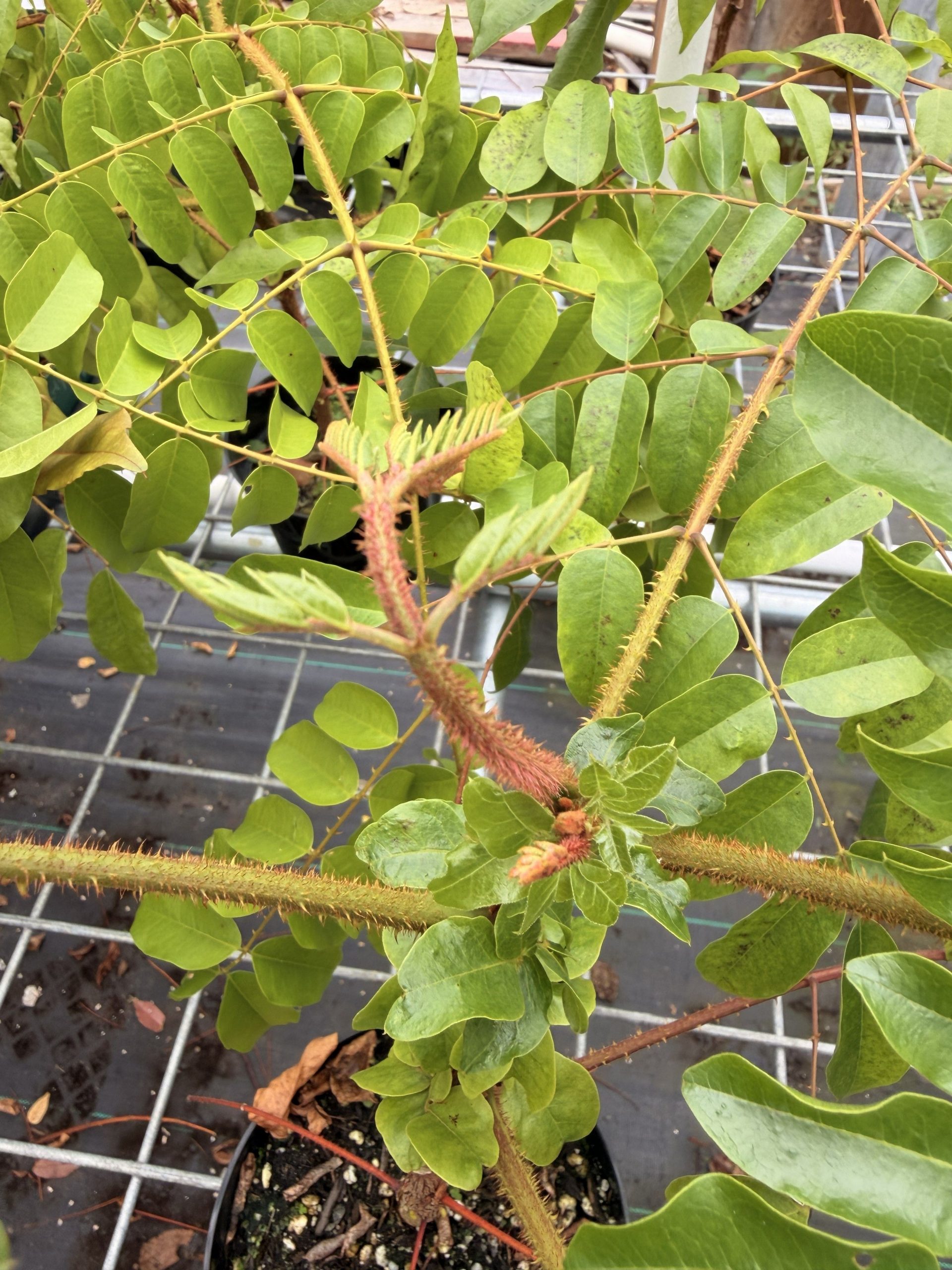
Lily also introduced us to another new native friend, kākalaioa or Guilandina bonduc. The name says it all: in English, kākalaioa can mean “thorny” when not referring to the plant. Although most Hawaiian plants have lost their defensive features, kākalaioa is has retained its prickles along the stems and fruits. Kākalaioa is a climbing shrub that is a part of the Fabaceae family, which means it fixes nitrogen! All of these qualities make kākalaioa an excellent native for soil building or forming natural barriers.
How to Order Plants
To see their full inventory of gorgeous native and canoe plants, you must stop by their nursery located at OK Farms. Lily is incredibly knowledgeable about every species she grows, and she will set you up for outplanting success! If you cannot make it out to the farm, Lily just started selling a selection of plants at Locavore in Hilo by Daiso. They will regularly stock six species, and two species will be swapped weekly to keep things fresh. If there are particular plants you are interested in, please talk story with Lily through her email: lilylovesplants@proton.me.
Finally, OK Farms is really looking forward to offering hydroseeding services for native restoration. The vision is to use hydroseeding for habitat restoration around the farm’s stream gulches once they secure funding for fencing. Hydroseeding is practical for many applications, such as nitrogen fixation, cover cropping, erosion control, and habitat restoration! OK Farms expects to offer these services commercially sometime in the next 5 years. In the meantime, they are working to expand their species inventory to supply suitable natives for any ʻāina. If you are curious about what native plants might work for your property, Lily welcomes people to contact them for a free on-site consultation.


